The 5 Things Actually Controlling Your Credit Score
Nobody explained this to me when I was 18. I just thought "pay your bills, get good credit." That's... barely scratching the surface. Here's the actual breakdown of what makes up your FICO® score, confirmed by myFICO:
1. Payment History — 35%
The biggest chunk. Lenders want to know: do you pay back what you borrow? Every on-time payment builds this up; every late or missed payment chips away at it. One or two late payments won't automatically tank you if your overall history is solid — but consistency is everything here. This is the non-negotiable foundation.
2. Amounts Owed / Credit Utilization — 30%
This one surprises people. It's not just how much you owe — it's how much you're using relative to your total credit limit. Maxing out your cards signals risk to lenders even if you pay on time. The general rule of thumb is to keep utilization under 30%, but lower is better. A $500 balance on a $600 limit card? That's hurting you more than you think.
3. Length of Credit History — 15%
Older accounts = more data = more trust. This factors in the age of your oldest account, your newest account, and the average age across all accounts. It's why closing an old card can quietly hurt your score — you're shortening your history. The lesson here: start early, keep accounts open if you can.
4. Credit Mix — 10%
Lenders like to see that you can handle different types of credit — think credit cards (revolving) alongside something like a car loan or a savings-backed installment loan (installment). You don't need one of every type, but having more than just a single credit card shows you can manage varied financial responsibilities.
5. New Credit / Hard Inquiries — 10%
Every time you apply for new credit, a hard inquiry hits your report and can ding your score a few points. Multiple applications in a short window look especially risky if you don't have a long history yet. Be strategic — don't apply for five cards in one month just because the sign-up bonuses look good.
Here's the thing most people miss: just paying your bills on time only directly addresses 35% of your score. The people who see real score jumps — like 40, 60, 80+ points — are the ones attacking multiple factors at once. Lowering utilization while building a mix of account types while keeping old accounts open while avoiding unnecessary inquiries. It's not one move, it's a strategy. The sooner you start thinking about all five factors, the faster your score reflects it.
(Source: myFICO — myfico.com/credit-education/whats-in-your-credit-score)
Where Does the Average American Actually Stand?
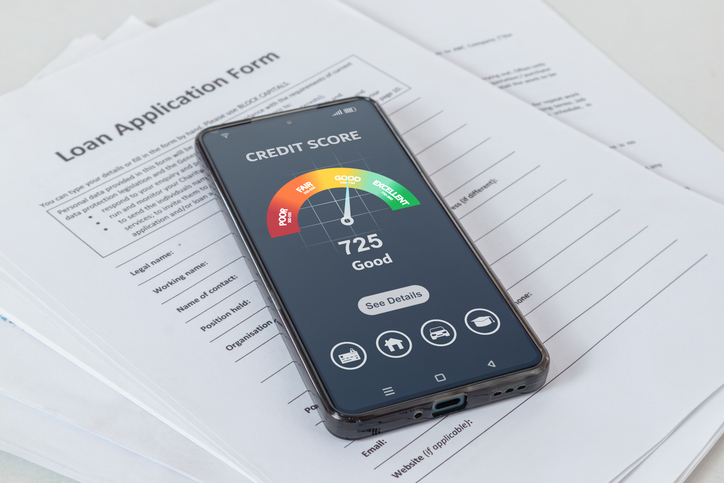
You might be wondering how your score stacks up. As of 2024, the national average FICO® Score sits at 717, according to FICO's own data. That puts most Americans squarely in the "Good" range (670–739) — not bad, but not great either. The "Very Good" range starts at 740, and that's where you really start seeing meaningfully better loan terms and interest rates.
A few trends worth knowing from FICO's 2024 analysis:
- As of April 2024, the average credit card utilization was 35% — right at or above the threshold that starts hurting scores
- Just over 18% of the population had a past-due payment on at least one account in the prior 12 months
- Younger consumers (Gen Z) have an average score of around 681, according to Experian's 2024 data
So the room for improvement is very real for a huge chunk of people — and understanding these five factors is exactly where that improvement starts.
Why Your Score Actually Matters (Real Dollar Consequences)
This isn't just an abstract number. Your FICO® Score has a direct, measurable impact on your financial life in ways people don't always connect until it's too late.
- Renting an apartment: Most landlords look for a score of 650 or higher. Below 600, you're facing real hurdles — extra deposits, co-signers, or outright rejections, according to GHS Federal Credit Union's breakdown.
- Buying a car: The average credit score for financing a new car in late 2025 was 754, per CNBC Select/Experian data. Drop to a subprime score (500–600) and you could be looking at an APR over 13% vs. ~5% for someone in the super prime range. On a $40,000 loan over 60 months, that difference can cost you $8,000+ in extra interest.
- Getting a mortgage: A conventional mortgage generally requires a minimum score of 620, but you'll want 740+ to access the most competitive rates. The median score for people who actually closed a mortgage is around 770, according to Federal Reserve Bank of New York data.
One bad stretch — a few months of missed payments, a maxed-out card — can follow you for years. Negative items like late payments stay on your credit report for 7 years from the date of the missed payment, as confirmed by the Consumer Financial Protection Bureau (CFPB). The damage is heaviest in the first 12–24 months, but it lingers. This is exactly why building good habits early beats trying to fix things later.
The Hidden Credit-Builder Most Renters Are Sleeping On
Here's something that genuinely surprised me: if you're a renter, you're probably making your largest monthly payment every single month — and it's doing absolutely nothing for your credit score by default. Your landlord almost certainly isn't reporting those on-time payments to the bureaus. Homeowners get credit history built into every mortgage payment. Renters? Not automatically.
But rent reporting is changing that. The Urban Institute conducted the first-ever randomized controlled study on rent reporting and found that positive rent reporting significantly increased the likelihood of going from no credit score to having one, and boosted the share of participants reaching "near-prime" status (601+) by an estimated 25 percentage points among those whose rents were reported.
A separate TransUnion analysis found that approximately 80% of subprime consumers saw their score increase just one month into a new apartment lease when rent was being reported — and nearly 41% saw a jump of 10 points or more in that first month alone.
And the adoption is growing fast. According to Urban Institute research from November 2025, the share of renter households with rent payments being reported has quadrupled since 2020, from ~3% to ~13%. Still a minority — but the trend is clear. If you're renting and not exploring rent reporting, you're leaving one of the easiest credit-building opportunities on the table.
The "Credit Invisible" Problem (And How to Get Out of It)
A lot of people reading this might be starting from zero. According to an updated CFPB report released in 2025, approximately 7 million Americans (2.7% of adults) are completely credit invisible — no credit record at all. Even more significant: nearly 25.3 million Americans (about 9.8% of adults) have a credit file but are "unscored" — meaning their file exists but doesn't have enough recent, valid activity to generate a score.
If you're in either of those groups, no lender can evaluate you. You get rejected by default, or you end up in the high-interest subprime lane with few options.
The way out is straightforward but requires deliberate action:
- Secured credit card: You put down a deposit (usually $200–$500) that becomes your credit limit. Use it for small purchases, pay it off monthly. This immediately starts building payment history and credit mix.
- Credit-builder loan: A savings-backed installment loan specifically designed for this. You make fixed monthly payments into a savings account, and the lender reports each payment to all three bureaus. By the time you finish, you have both payment history and savings.
- Rent and utility reporting: If you're already paying rent and utilities on time, get those payments reported. You're doing the work — you might as well get the credit for it.
- Authorized user: If a family member or close friend has a long-standing, well-managed credit card, being added as an authorized user can extend that history to your report.
The key insight is that you don't need to borrow a bunch of money to build credit. You need reported, consistent payment history — and there are now more ways to generate that than ever before.
The Real Play: Attacking All Five Factors Simultaneously
Let's bring it all together. Most people approach credit improvement reactively — they miss a payment, panic, and start paying on time again. Or they hear "pay down your debt" and focus exclusively on utilization. That single-factor thinking is why progress feels slow.
The people who see rapid, meaningful score improvement are the ones who build a system that addresses all five factors at once:
- Never miss a payment — automate minimums at minimum, never let anything go 30 days late
- Keep utilization under 30% — ideally under 10% for best scoring impact; pay cards down before the statement closes, not just the due date
- Start as early as possible and keep old accounts open — every month you delay is a month of history you can't get back
- Add an installment account if you only have revolving credit — a credit-builder loan is the lowest-risk way to do this
- Be strategic about applications — space out new credit applications, and never apply for multiple cards in the same month
None of these require a high income or perfect circumstances. They require consistency and awareness — two things that are completely in your control, starting right now.

.webp)